In this article
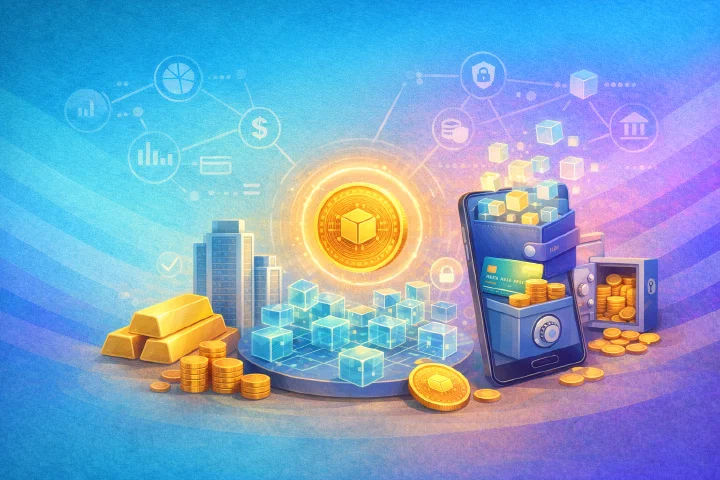
The financial market is undergoing one of the greatest transformations in its history: asset tokenization. What was once restricted to large investors and financial institutions is now becoming accessible to anyone with a smartphone.
But what exactly are tokenized investments? Is it just another tech hype cycle, or does it genuinely change how we invest? And most importantly: is it worth investing in?
In this article, we clearly explain how tokenization works, which types of assets are already being tokenized, what the risks and opportunities are, and how you can prepare for this new reality.
What Are Tokenized Investments?
Tokenization is the process of transforming a real asset into a digital token recorded on a blockchain. This token represents a fraction (or the entirety) of the asset and can be bought, sold, and transferred digitally.
Simple analogy:
Imagine a commercial building worth $2 million. Traditionally, only someone with $2 million (or a large portion of it) can invest in it. With tokenization, this building is “divided” into 200,000 tokens worth $10 each. Now, anyone can buy tokens and become a fractional owner of the building, receiving proportional rental income.
How it works technically:
- A real asset is selected (property, debt instrument, artwork, receivable)
- A tokenization company creates a smart contract on a blockchain
- The asset is divided into digital tokens with proportional value
- Tokens are made available to investors on a platform
- Investors buy tokens and receive proportional returns
- Tokens can be traded on secondary markets
Types of Tokenized Assets
Tokenization is expanding to virtually all asset types:
Tokenized Fixed Income
The fastest-growing category globally.
| Type | What It Is | Typical Return |
|---|---|---|
| Tokenized bonds | Corporate or government debt on blockchain | Base rate + 2-5% |
| Tokenized receivables | Right to receive future payments | Base rate + 4-8% |
| Tokenized real estate debt | Mortgage-backed securities on chain | Base rate + 3-6% |
| Tokenized treasury bills | Government securities via blockchain | Base rate |
| Revenue-share tokens | Share of business revenue streams | 8-20% annually |
Tokenized Real Assets
| Type | Example | Minimum Investment |
|---|---|---|
| Real estate | Fractions of apartments, warehouses | Starting at $10 |
| Art | Fractions of valuable paintings | Starting at $20 |
| Gold and metals | Grams of tokenized gold | Starting at $10 |
| Wine and whiskey | Collector bottles | Starting at $50 |
| Energy | Solar energy credits | Starting at $100 |
Other Assets
- Tokenized equities: fractional shares accessible to all
- Intellectual property assets: music royalties, patents
- Carbon credits: tokenized environmental offsets
Advantages of Tokenized Investments
1. Accessibility
The greatest benefit is democratized access. Assets that previously required investments of $100,000 or more can now be accessed with $10 or $50.
2. Fractionalization
Buying “pieces” of assets enables much greater diversification with less money. Instead of putting $10,000 in a single asset, you can spread it across 20 or 30 different tokens.
3. Transparency
Since records are on blockchain, the entire ownership chain is traceable and immutable. You can verify the asset’s existence and history at any time.
4. Liquidity (potentially greater)
Token secondary markets operate more nimbly than traditional markets. Some tokens can be traded 24/7, unlike traditional assets limited to stock exchange hours.
5. Operational efficiency
Without traditional intermediaries (notaries, custodians, bank transfers), operational costs are significantly lower.
6. Programmability
Smart contracts can automate income distribution, interest payments, and even vesting conditions — all without human intervention.
Risks of Tokenized Investments
1. Regulatory risk
Legislation around tokens is still developing in most countries. Regulatory changes can impact platform operations and the validity of tokens.
2. Platform risk
If the tokenization platform closes or goes bankrupt, you may have difficulty accessing your tokens or exercising your rights over the underlying asset.
3. Liquidity risk
Despite the promise of greater liquidity, many tokens still don’t have active secondary markets. You might struggle to sell when you want to.
4. Underlying asset risk
A token is only as secure as the asset it represents. If the tokenized property loses value, or if the issuing company defaults, the token loses value too.
5. Technology risk
Smart contract bugs, platform hacks, or blockchain issues can compromise your investments.
6. Tax complexity
Taxation of tokens still raises questions. Depending on the type of tokenized asset, fixed income, variable income, or even cryptocurrency rules may apply.
How to Invest in Tokenized Assets
Choosing a platform:
Look for these essential criteria:
- Regulatory compliance: the platform should be registered with the appropriate financial authority
- Track record: how long has the platform been operating? How many successful investments?
- Underlying asset quality: what assets back the tokens? Are they audited?
- Secondary market: can you sell tokens before maturity?
- Transparency: detailed information about each token offering
- Security: two-factor authentication, cold storage, insurance
Popular platforms globally:
- Securitize (US): SEC-registered digital securities platform
- Polymath (Global): tokenization infrastructure for financial products
- RealT (US): tokenized real estate investments
- Lofty (US): fractional real estate on blockchain
- Backed Finance (EU): tokenized stocks and ETFs
How much to invest?
As an alternative investment still maturing, the recommendation is:
| Profile | Token Allocation |
|---|---|
| Conservative | 0-5% of portfolio |
| Moderate | 5-10% of portfolio |
| Aggressive | 10-15% of portfolio |
Tokenization vs. Traditional Investments
| Criteria | Traditional Investment | Tokenized Investment |
|---|---|---|
| Minimum investment | $1,000-$100,000+ | $10-$500 |
| Liquidity | Variable (T+0 to T+30) | Variable (secondary market) |
| Transparency | Periodic reports | Real-time blockchain |
| Operating costs | Brokerage fees, custody | Generally lower |
| Trading hours | Business hours | Potentially 24/7 |
| Regulation | Established | Developing |
| Diversification | Limited by minimums | High (fractionalization) |
The Future of Tokenization
Trends for the coming years:
- Central Bank Digital Currencies (CBDCs): governments worldwide are developing digital currencies that will integrate with regulated tokens
- Tokenized government bonds: treasury departments are studying tokenization of public debt, making investment even more accessible
- Interoperability: different blockchains will be able to exchange tokens, increasing liquidity
- Consolidated regulation: as regulatory frameworks mature, more institutional investors will enter the market
- Tokenization of everything: from stocks to real estate, from receivables to royalties, the trend is for more and more assets to be tokenized
How Monely Can Help
Investing in tokenized assets requires organization and tracking. Monely is perfect for this:
- Financial goals: set specific goals to build your token portfolio, tracking progress month by month
- Progress charts: visualize how your tokenized investments are performing over time
- Custom categories: create categories like “Fixed Income Tokens,” “Real Estate Tokens,” “Receivable Tokens” to know exactly how much you have in each type
- Consolidated view: see your tokenized investments alongside the rest of your portfolio to maintain proper proportions
- Contribution tracking: keep a history of every investment to simplify tax reporting
With Monely, you maintain complete control over your tokenized investments without losing sight of your portfolio as a whole.
Conclusion
Tokenized investments represent a natural evolution of the financial market. Blockchain technology is making investments more accessible, transparent, and efficient — and this trend will only accelerate.
But like any new investment, caution and education are essential. Don’t invest based on hype alone. Understand the underlying asset, know the platform, verify the regulations, and never invest more than you can afford to lose.
Tokenization won’t replace traditional investments overnight — but it will complement them in increasingly meaningful ways. Those who start learning now will be ahead of the curve.
Next steps: Download Monely and start organizing your tokenized investments — goals, categories, and charts to track this new frontier of the financial market.