इस लेख में
क्या आपने कभी कोई stock या cryptocurrency सिर्फ इसलिए खरीदी क्योंकि “सब लोग इसी की बात कर रहे थे”? या market crash की खबर देखते ही घबराकर अपना निवेश बेच दिया? अगर हाँ, तो आप अकेले नहीं हैं: studies दिखाती हैं कि लगभग 70% individual investors majority के behavior से influenced होकर decisions लेते हैं, अक्सर अपना analysis या strategy ignore करके।
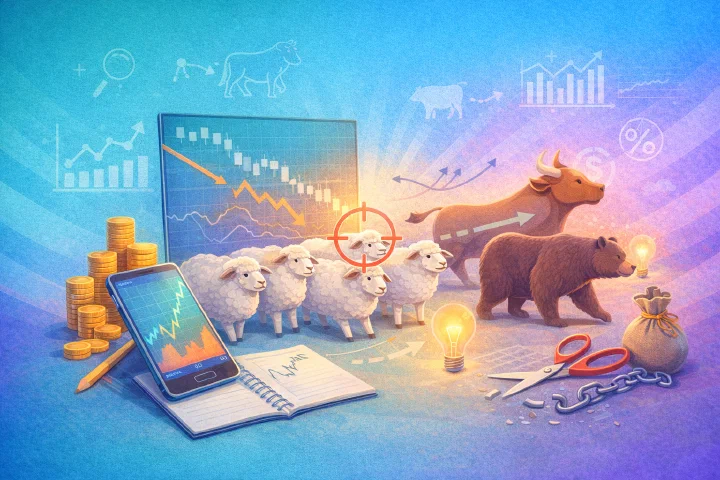
इस phenomenon का नाम है: निवेश में भेड़चाल प्रभाव (Herd Mentality)। यह एक behavioral bias है जो हमें दूसरों के financial decisions copy करने पर मजबूर करता है, यह मानकर कि “अगर इतने लोग कर रहे हैं, तो सही ही होगा।” समस्या? भीड़ अक्सर गलत होती है, खासकर market के सबसे critical moments पर — और crowd के पीछे चलना आपके portfolio को बुरी तरह नुकसान पहुंचा सकता है।
इस लेख में हम समझेंगे कि हमारा brain हमें भेड़चाल की तरफ क्यों धकेलता है, investments में यह कैसे manifest होता है, और सबसे महत्वपूर्ण — अपनी profile और goals के आधार पर अपनी strategy कैसे develop करें, न कि दूसरे क्या कर रहे हैं।
निवेश में भेड़चाल क्या है
Herd mentality एक psychological tendency है majority के actions को follow करने की, खासकर uncertain situations में। Investing में, इसका मतलब है — जब सब खरीद रहे हैं तो खरीदना और जब सब बेच रहे हैं तो बेचना — economic fundamentals या अपनी strategy की परवाह किए बिना।
हमारा Brain ऐसा क्यों करता है?
इसके गहरे evolutionary और psychological कारण हैं:
Evolutionary कारण:
- Group follow करने से ancestral survival chances बढ़ते थे
- Majority से असहमति का मतलब social exclusion का risk
- Mental shortcut: “हजारों लोग गलत नहीं हो सकते”
Modern psychological कारण:
- FOMO (Fear of Missing Out): दूसरों के अवसरों से वंचित रहने का डर
- Social validation: Group approval और belonging की तलाश
- Regret aversion: सबके साथ गलत होना prefer करना, अकेले सही होने से
- Collective overconfidence: Group decisions सुरक्षित हैं का भ्रम
भेड़चाल के triggers:
| Trigger | कैसे manifest होता है | Real Example |
|---|---|---|
| Sensationalist media | “नए investment trend” की headlines | “Adani shares 300% चढ़ेंगी” |
| Social media influencers | Instagram/YouTube पर “hot tips” | “मैंने इस stock में ₹50 लगाए ₹5 लाख हुए” |
| Social conversations | दोस्त/रिश्तेदारों के recent gains की बातें | “मेरे भाई ने Crypto में double किए” |
| Collective panic | Sudden drop से mass selling | COVID March 2020 crash |
| Market momentum | Rising assets और ज्यादा buyers | Nifty bubble |
सबसे बड़ी समस्या: भेड़चाल आपको market top पर entry कराती है (सब खरीद रहे हैं) और bottom पर exit (सब बेच रहे हैं) — बिल्कुल उल्टा जो करना चाहिए।
भेड़चाल आपके निवेश को कैसे नुकसान पहुंचाती है
1. Overvalued Assets खरीदना
जब “सब” कुछ खरीद रहे हों, prices already real value से बहुत ऊपर जा चुके हैं। आप bubble के top पर entry करते हैं।
भारतीय उदाहरण: 2021 में Crypto boom में Bitcoin ₹52 लाख तक पहुंचा था। हजारों नए investors Reddit groups, influencers, और news से influenced होकर इस point पर आए। 2022 में Bitcoin ₹12 लाख तक गिरा — 77% की गिरावट। जो भीड़ के पीछे गए उन्होंने अधिकांश निवेश खोया।
2. सबसे बुरे समय पर बेचना
Herd mentality दोनों तरफ काम करती है। Market गिरने पर collective panic investors को जल्दी बेचने पर मजबूर करती है।
NSE/BSE data: March 2020 crash में, जब Nifty 38% एक महीने में गिरा, retail investors का एक बड़ा हिस्सा panic में positions sell कर गया। जिन्होंने hold किया या और खरीदा, उनका portfolio 8 महीनों में recover हुआ और फिर Nifty नई heights पर गया।
3. Risk Profile को Ignore करना
भीड़ के पीछे चलने से आप भूल जाते हैं कि आप कौन हैं as an investor।
Common scenario:
- आपके पास ₹5 लाख Fixed Deposits में हैं (conservative profile)
- दोस्त SME stocks में profit कर रहे हैं
- आप ₹4 लाख intraday trading में लगाते हैं बिना experience के
- 3 महीने में ₹2 लाख खो देते हैं
- Emergency fund compromise हो जाता है
4. Speculative Bubbles और Crashes
Herd mentality financial bubbles का fuel है।
भारत में भेड़चाल के उदाहरण:
| Bubble | Period | क्या हुआ | नतीजा |
|---|---|---|---|
| Harshad Mehta era | 1990-92 | Scam-driven rally | 70% crash |
| Dot-com India | 2000 | Tech stocks | Massive correction |
| Infrastructure bubble | 2007-08 | Infra stocks | 60-70% गिरावट |
| Small-cap mania | 2017-18 | Small/mid caps | 40-50% correction |
| Crypto India | 2021 | BTC/ETH/ALT | 70-80% crash |
Meme stocks का Indian version: 2021 में कुछ penny stocks 500-1000% चढ़े WhatsApp forwards और Telegram groups की वजह से — फिर 90% से अधिक गिरे।
5. अधिक Costs और Taxes
Herd mentality frequent operations को बढ़ावा देती है: खरीदो, बेचो, फिर खरीदो।
Practical example:
- Investor 10 बार buy-sell करता है “hot tips” follow करके
- Gross profit: ₹50,000
- STCG tax (20%): ₹10,000
- Brokerage + STT + exchange charges: ₹3,000
- Net profit: ₹37,000 (26% कम)
Long-term strategy रखने पर LTCG (12.5%) pay करते और costs कम होतीं।
पहचानें कि आप भेड़चाल में हैं
Herd Mentality Symptoms Checklist:
- क्या आप ऐसे assets खरीदते हैं “जिनकी सब बात कर रहे हैं” बिना समझे?
- क्या निवेश का decision दोस्तों से बात करने के बाद drastically बदल जाता है?
- Long-term strategy होने के बावजूद market crash की खबर पर panic होता है?
- कुछ “FOMO” से खरीदा है क्योंकि “miss नहीं करना था”?
- Telegram groups, Reddit, या influencers के “tips” पर choices based हैं?
- बिना fundamentals reassess किए, सिर्फ इसलिए sell किया कि बाकी sell कर रहे थे?
- Social media पर दूसरों के quick gains देखकर envy होता है?
- कोई written, quantified strategy नहीं — “moment पर decide” करते हैं?
अगर 3 या अधिक items checked हैं, herd mentality आपके investments को influence कर रही है।
अपनी खुद की Strategy कैसे Develop करें
1. Risk Profile Honestly Define करें
किसी भी पैसे को invest करने से पहले, आप as an investor कौन हैं यह समझें।
जरूरी सवाल:
- पैसों की जरूरत कब होगी? (short, medium, long term)
- कितने % loss झेल सकते हैं बिना panic के? (5%, 10%, 20%, 50%?)
- Volatile investments के साथ सो सकते हैं रात को?
- क्या 6-12 महीने का emergency fund है? (नहीं है तो stocks में invest करने का time नहीं)
Investor Profiles:
| Profile | विशेषताएं | Suggested Allocation |
|---|---|---|
| Conservative | Loss नहीं झेलते, safety priority | 80% fixed income (FD, PPF, Bonds), 20% equity |
| Moderate | Moderate volatility accept | 50% fixed income, 50% equity/MF |
| Aggressive | 30-50% drop झेल सकते, long-term focus | 70-90% equity, 10-30% fixed income |
Practical action: अपने broker (Zerodha, Groww, HDFC Securities) की website पर investor profile test लें। लेकिन honest रहें — ज्यादा “aggressive” दिखने के लिए झूठ न बोलें।
2. Documented Investment Strategy बनाएं
Written strategy आपके साथ एक contract की तरह काम करती है — जब emotion आपको डगमगाने की कोशिश करे, तब consult करें।
Strategy में क्या होना चाहिए:
- Financial goal: “2045 में ₹2 करोड़ retirement” या “5 साल में घर”
- Asset allocation: हर class में % (stocks, MF, bonds, gold, etc.)
- Buy criteria: क्यों और कब नया asset खरीदते हैं
- Sell criteria: कब बेचते हैं (“कभी panic में नहीं” — यह rule होना चाहिए)
- Rebalancing: हर 6-12 महीने में original % पर वापस लाना
- Emergency rules: 20%, 30%, 50% गिरावट पर क्या करेंगे
Written Strategy का Example:
Investment Strategy — Ankit Sharma
Goal: 2035 तक ₹50 लाख (8 साल)
Profile: Moderate

Asset Allocation:
- 30% PPF/FD (inflation protection)
- 30% Large-cap ETF / Index Fund (Nifty 50)
- 20% REITs / Real Estate MF
- 10% International ETF (Nasdaq/S&P 500)
- 10% Liquid Fund (tactical reserve)

Contributions: ₹25,000/महीना, हर महीने की 5 तारीख
Rebalancing: Semi-annual (January और July)
Buy: जब कोई asset 12-month average से 15% नीचे हो
Sell: जब कोई asset portfolio का 40% हो जाए

Golden Rule: MARKET DROPS पर SELL नहीं करना
3. किसी भी Decision से पहले 72-Hour Rule
जब भी news, “tips,” या market movements से buy/sell का impulse आए, 72 घंटे रुकें।
क्यों काम करता है:
- Strong emotions (FOMO, panic) 24-48 घंटे रहती हैं
- Rationally evaluate करने का time मिलता है
- “Urgency” false थी — यह दिखता है
Practical action:
- Decision लिखें: “X stock खरीदना है क्योंकि YouTube पर देखा”
- Calendar पर 3 दिन बाद mark करें
- तीसरे दिन फिर पढ़ें: क्या अभी भी sense बनता है? क्यों?
- तब ही execute करें (या discard)
Exception: Monthly programmed contributions — ये automatic होनी चाहिए, 72h की जरूरत नहीं।
4. Market Noise और “Hot Tips” को Actively Ignore करें
Herd mentality constant information से feed होती है। Noise sources से disconnect करें।
क्या avoid करें:
- Telegram investment groups: 99% noise, 1% useful
- Sensationalist YouTube channels: “URGENT: इस stock को अभी खरीदो!”
- Twitter/X day traders: FOMO और short-term operations promote करते हैं
- Real-time market news: (Limit करें 1x per week)
- Courses बेचने वाले influencers: इनका interest आपसे trade कराना है
क्या consume करें (moderately):
- Trusted research houses: Motilal Oswal Research, HDFC AMC (1x/month)
- Company earnings reports: Quarterly results जो assets आपके पास हैं
- Investment books: “The Intelligent Investor”, “One Up On Wall Street”
- Educational podcasts: Paisa Vaisa, Wint Wealth
Practical rule: Market information consumption को 2 घंटे/week तक limit करें।
5. Objective Metrics पर Focus करें, Stories पर नहीं
Herd mentality exciting narratives पर पलती है। इसे data और numbers से combat करें।
Stocks के लिए:
- P/E Ratio: Stock expensive या cheap है profit से compare करके?
- Dividend Yield: Company कितना dividend pay करती है?
- ROE (Return on Equity): Company efficient है?
- Debt-to-EBITDA: Debt control में है?
Mutual Funds के लिए:
- Expense Ratio: Low रखें (Index funds: <0.1%)
- Alpha vs benchmark: Fund manager truly value add कर रहा है?
- Sharpe Ratio: Risk-adjusted returns कैसे हैं?
- Consistency: क्या 5+ साल consistently benchmark beat किया?
6. Contrarian Thinking Practice करें
Warren Buffett और Rakesh Jhunjhunwala जैसे legendary investors भीड़ के opposite करके अमीर हुए।
Warren Buffett के quotes:
- “Be fearful when others are greedy, and greedy when others are fearful.”
- “Stock market patience से impatience तक पैसे transfer करने का device है।”
- “Most लोग stocks में interested होते हैं जब सब interested हों। Interesting time तब है जब कोई interested न हो।”
Contrarian thinking कैसे apply करें:
जब सब खरीद रहे हों (euphoria):
- Question करें: “यह asset क्यों नहीं गिर सकता?”
- Fundamentals review करें: company changed है या सिर्फ price?
- Partial profits लेने पर consider करें
जब सब बेच रहे हों (panic):
- पूछें: “क्या fundamentals बदले हैं या सिर्फ price?”
- Company solid रहे तो more खरीदने का time है (sale पर prices!)
- जो सबसे ज्यादा गिरे उन assets में contributions बढ़ाएं
Real Example: March 2020 गिरावट में, जो hold करके और buy किए:
- Reliance Industries ₹875 → ₹2,600 (197% return)
- HDFC Bank ₹875 → ₹1,700 (94% return)
- TCS ₹1,650 → ₹3,800 (130% return)
7. Contributions Automate करें
Herd mentality से बचने का सबसे अच्छा तरीका है process से emotional decisions हटाना।
कैसे automate करें:
- Fixed monthly amount define करें: ₹5,000, ₹10,000, ₹25,000 — जो budget में fit हो
- Fixed day choose करें: हर 5 तारीख, हर 15 तारीख, आदि
- Auto SIP set करें: Bank से directly MF/stock में
- हमेशा same assets खरीदें: Written strategy के अनुसार
Automation के फायदे:
- Emotional timing eliminate: “Best moment” guess करने की कोशिश नहीं
- Rupee Cost Averaging (RCA): कम पर ज्यादा units, महंगे पर कम
- Guaranteed discipline: हर महीने invest, चाहे news कुछ भी हो
- कम stress: Daily market monitor नहीं करना पड़ता
RCA Example:
| महीना | Nifty 50 Index Fund NAV | Investment | Units मिले |
|---|---|---|---|
| Jan | ₹200 | ₹10,000 | 50.00 |
| Feb | ₹175 | ₹10,000 | 57.14 |
| Mar | ₹230 | ₹10,000 | 43.48 |
| Apr | ₹190 | ₹10,000 | 52.63 |
| Total | — | ₹40,000 | 203.25 units |
Average price: ₹40,000 ÷ 203.25 = ₹196.82 (January में एकमुश्त लगाने से बेहतर)
Monely आपकी कैसे मदद कर सकता है
Herd mentality को resist करने के लिए discipline, planning, और अपने goals पर focus चाहिए। Monely ऐसे tools offer करता है जो आपकी strategy बनाए रखने में मदद करते हैं:
Personalized Financial Goals: Specific goals बनाएं (emergency fund, घर की down payment, retirement) और visual progress track करें। यह आपके goal पर focus रखता है, दूसरे क्या कर रहे हैं इस पर नहीं।
Monthly Contribution Control: Investment contributions को recurring transactions के रूप में record करें। Clear history होगी कि हर महीने कितना invest हुआ — market swings से independent discipline।
Account Separation by Type: App में separate accounts बनाएं: “Emergency Fund”, “Long-Term Investments”, “Stocks”, “Bonds”। Asset allocation visualize करना और documented strategy से compare करना आसान होता है।
Consolidated Wealth Reports: कई महीनों में total wealth evolution देखें। Long-term charts दिखाते हैं कि short-term volatility normal है — हर drop या rise पर react करने की जरूरत नहीं।
Rebalancing Reminders: Semi-annual reminders set करें portfolio review और rebalancing के लिए। Daily news पर based impulsive decisions से बचाव होगा।
Passive Income Tracking: Dividends, Mutual Fund distributions, या interest मिले तो उन्हें “passive income” के रूप में record करें। इस regular income को देखने से long-term strategy को reinforce होती है।
Real Cases: भेड़चाल की कीमत
Case 1: Adani Group Rally — 2022-23
क्या हुआ: 2022 में Adani Group के stocks एक के बाद एक record highs बना रहे थे। Retail investors WhatsApp forwards, Telegram groups, और TV channels से influenced होकर mass में खरीदने लगे।
Fundamentals: Hindenburg Research report ने serious concerns उठाए।
नतीजा: Early 2023 में कई Adani stocks ने 60-80% correction दिया। Top पर FOMO से खरीदने वालों ने बड़ा नुकसान उठाया।
Lesson: Popular narrative कितनी भी strong हो, fundamentals ignore न करें।
Case 2: Crypto India — 2021 की Euphoria
क्या हुआ: 2021 में Cryptocurrency India में mainstream हो गई। WazirX, CoinDCX जैसे exchanges पर millions of new accounts खुले। “Crypto millionaires” की stories वायरल थीं।
Buyer profile: 70% से अधिक ऐसे investors जिन्होंने पहले कभी crypto नहीं खरीदी थी — pure FOMO।
नतीजा: 2022 में BTC ₹55 लाख से ₹12 लाख तक गिरा (78% drop)। जिन्होंने long-term strategy बनाई और bear market में और खरीदे वे recover हुए; जो panic-sold हुए उन्होंने losses crystallize किए।
Lesson: Volatile assets में conviction आपके own thesis पर based होनी चाहिए, collective euphoria पर नहीं।
Case 3: SME IPO Mania — 2023-24
क्या हुआ: BSE SME platform पर IPOs 1000%+ subscription के साथ list हो रहे थे। “Easy listing gains” का FOMO फैला। Telegram groups में “guaranteed listing gain” promote होने लगे।
Reality from SEBI data:
- 40% से अधिक SME IPOs listing के 6 महीने में issue price से नीचे
- Heavy manipulation in many cases
- SEBI ने कई cases में action लिया
Lesson: Short-term operations zero-sum game है — किसी के win के लिए किसी को lose करना होगा। Institutions का technological और informational advantage retail से बहुत आगे है।
निष्कर्ष: आपकी Wealth, आपके Rules
Herd mentality investors के लिए सबसे powerful और destructive behavioral biases में से एक है। यह bubble tops पर buy, crash bottoms पर sell, risk profile ignore, और long-term strategy छोड़ने पर मजबूर करती है।
लेकिन आपको another statistic नहीं बनना है। अपने profile के आधार पर strategy develop करके, objective buy/sell criteria define करके, contributions automate करके, और market noise को actively resist करके, आप consistently wealth build कर सकते हैं — चाहे भीड़ कुछ भी करे।
याद रखें: Warren Buffett, Rakesh Jhunjhunwala, और Vallabh Bhanshali जैसे legendary investors ने भीड़ का exactly opposite करके fortune बनाया। जब सब euphoria में खरीद रहे थे, उन्होंने बेचा। जब सब panic में बेच रहे थे, उन्होंने खरीदा। यह इसलिए नहीं कि वे smarter थे, बल्कि इसलिए कि उनके पास strategy थी और उसे follow करने का discipline।
Market patience, discipline, और independent thinking को reward करता है। भीड़ आखिर में bill चुकाती है।
अपने investments track करना, monthly contributions control करना, और financial goals (भीड़ के नहीं) पर focus बनाए रखना चाहते हैं? Monely try करें और अपनी investment strategy develop करने के लिए सभी tools पाएं।